Pest resistant? Yes.
Fiber cement rather than wood, so there is nothing in it for woodpeckers, insects or other pests. It is also moisture resistant, which denies the damp wood that the worst offenders burrow into.

You probably know James Hardie siding for low-maintenance looks, and for how it stands up to wind, weather and fire. Pest resistance is the benefit nobody mentions until a woodpecker has already been through the gable.
Fiber cement and sand. No wood, no cellulose worth chewing, no appeal.
 Elite Preferred is James Hardie’s top contractor designation. Every Good Guys installer is Hardie Alliance certified.
The envelope Siding, trim and soffit closed off together
Two of these have a clean yes. One of them does not, and we would rather tell you now than have you find out later.
Fiber cement rather than wood, so there is nothing in it for woodpeckers, insects or other pests. It is also moisture resistant, which denies the damp wood that the worst offenders burrow into.
Termites want wood and organic material. James Hardie board is fiber cement and sand. Its density and moisture resistance deter them further.
No exterior siding is deemed 100% rodent proof by officials and we will not claim it is. What is true is that mice have little interest in chewing fiber cement, which cannot be said about wood siding or boards.
Carpenter ants and termites are drawn to wet, softened wood far more than to dry sound timber. A wall that stays wet behind the cladding is the actual invitation, and on older Long Island housing stock that is usually a flashing or a soffit problem rather than a material problem.
James Hardie is moisture resistant, but the install is what keeps water out of the wall in the first place: clearance to grade, flashing at every penetration, and a properly closed soffit. HardieSoffit pre-cut panels close off one of the most common entry points on the house.
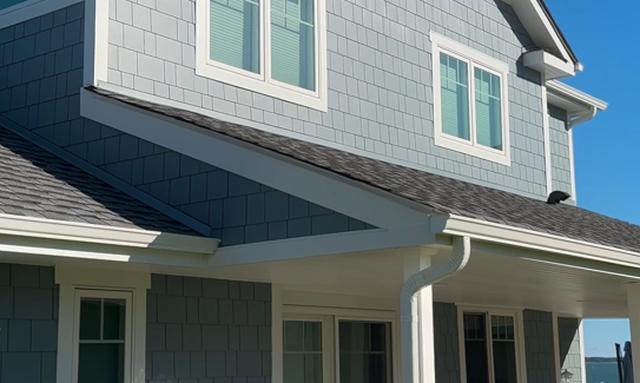
Cedar shingle is beautiful and it is also a woodpecker's preferred working surface. On the North Shore and out east, holes drilled through cedar gables are a routine and expensive repair, and filling them does not stop the bird coming back.
Fiber cement ends that conversation. There is nothing behind it a woodpecker is looking for and nothing in it they can get through.


We also issue our own warranty for our work, separate from the materials warranty James Hardie offers.
Do not take our word for it: see the project galleries and the testimonials.
Yes. Because it is fiber cement rather than wood, it holds no appeal for woodpeckers, insects or other pests. It is also moisture resistant, which matters just as much: the pests that do the worst damage are the ones that burrow into wet wood.
Technically, no exterior siding is deemed 100% rodent proof by officials, and we are not going to claim otherwise. What is true is that mice and other rodents have little interest in chewing fiber cement, which cannot be said about standard wood siding or boards.
Termites want wood and other organic material. James Hardie siding is made of fiber cement and sand, so there is nothing in it for them. It is also moisture resistant and dense, which deters termites further.
Woodpeckers drill wood and wood composite looking for insects and nesting cavities, and on a cedar-shingled house on Long Island that damage is common and expensive. They have no reason to drill fiber cement and cannot get through it if they try.
Soffit, trim joints, and any penetration that was never flashed or sealed properly. Which is why the material is only half the answer and the install is the other half. HardieSoffit pre-cut panels close off one of the most common entry points.
Siding, trim and soffit scoped together, so the entry points close at the same time. No cost and no obligation.